cristal poker casino — secretos revelados | cristal poker casino

cristal poker casino — el ranking de jugadores en 2026

cristal poker casino vive un momento dorado, con una audiencia cada vez más amplia y participativa. La accesibilidad de las plataformas en línea ha democratizado el acceso a este juego, permitiendo que cualquier persona pueda probar suerte. No obstante, la competencia es feroz, y dominar aspectos como casino cristal poker se ha vuelto imprescindible para avanzar.

Ver también:

Todo sobre cristal poker ranking en la sección de resumen

Progressive Knockout is a tournament structure that revolutionizes the traditional single-elimination format by introducing a dynamic and escalating element of unpredictability. Unlike standard brackets where a single loss eliminates a competitor, the Progressive Knockout system allows for a series of staged eliminations, each more severe than the last. This approach is designed to maintain high levels of engagement and tension throughout the entire event, ensuring that no participant can coast on early victories. The core principle is that the stakes increase with each round, not just in terms of the prize pool but also in the manner of elimination, which becomes more complex and demanding. This structure is particularly popular in competitive gaming, poker tournaments, and certain sports leagues where strategic depth and adaptability are paramount. The first stage typically involves a preliminary round where all entrants compete in a series of short, low-stakes matches. The bottom performers, often determined by a combination of win-loss records and point differentials, are marked for potential elimination. However, instead of being immediately removed, they are placed on a ‘watch list’ and given a chance to redeem themselves in a secondary challenge. This secondary challenge is designed to test specific skills that were lacking in the initial round, such as speed, accuracy, or strategic planning, depending on the nature of the competition. For instance, in a first-person shooter tournament, the redemption challenge might be a timed obstacle course that emphasizes movement and aim, while in a strategy game, it could be a puzzle that requires resource management under pressure. Only after this secondary phase are the weakest performers actually eliminated, and even then, a small number may be granted a ‘lifeline’ based on their overall potential or fan votes. This lifeline system adds a crowd-pleasing element, as viewers can directly influence the fate of a favorite underdog, thereby increasing emotional investment. As the tournament progresses, the elimination criteria become more stringent. In the second stage, the watch list is longer, and the redemption challenges are more complex, often requiring participants to collaborate with rivals or face sudden-death tiebreakers. Collaboration, in particular, introduces a psychological layer, as competitors must temporarily ally with someone they might face later, testing their ability to negotiate and trust under stress. The third stage introduces a ‘progressive multiplier’ where each loss not only brings a participant closer to elimination but also increases the difficulty of their subsequent matches. This means that a competitor who loses early but survives must face increasingly stronger opponents, while a competitor who wins early faces progressively weaker opposition, creating a natural balancing mechanism. The multiplier is calculated based on the number of losses a participant has accrued, with each loss adding a percentage increase to the difficulty rating of their next opponent, which is determined by a pre-tournament seeding that is adjusted in real-time. The final stages of a Progressive Knockout tournament are characterized by a ‘knockout threshold’—a predetermined number of losses that automatically triggers elimination, regardless of the participant’s overall standing. This threshold is not fixed; it adjusts based on the number of remaining competitors and the pace of the event, ensuring that the tournament concludes within a set timeframe. For example, in a 64-player bracket, the threshold might start at three losses, but by the quarterfinals, it drops to two, and in the semifinals, it becomes a single loss, reverting to a traditional knockout but with a twist: the final match is a best-of-three series where the loser of the first game gets a ‘progressive advantage’ in the second game, such as starting with a point lead or having the option to choose the map. This advantage is designed to keep the final competitive and prolong the excitement, as the underdog is given a tangible boost that can lead to a dramatic comeback. This system has been praised for its ability to reward consistency while still allowing for dramatic upsets. It also mitigates the harshness of a single bad day, as participants have multiple chances to recover, but those chances come with increasing difficulty. Organizers of Progressive Knockout events must carefully calibrate the elimination thresholds and the nature of the redemption challenges to avoid making the tournament too long or too forgiving. Data from past tournaments shows that this format increases viewer retention by up to 40% compared to standard brackets, because the narrative arcs are more complex and the outcome is less predictable until the very end. Furthermore, it encourages participants to develop a versatile skill set, as they cannot rely solely on a single strong strategy. For example, a poker player who excels at no-limit hold’em but struggles with Omaha will be forced to improve their game or risk elimination in a redemption challenge that features mixed games. In practice, the Progressive Knockout has been successfully implemented in events like the ‘Global Esports Series’ and the ‘International Poker Open,’ where it has been credited with producing more memorable moments and higher-quality finals. The psychological impact on participants is also notable: the constant threat of elimination with escalating stakes forces them to manage their mental and physical energy carefully, leading to more disciplined performances. Many competitors report that the format pushes them to develop better time management and stress-coping techniques, which they carry over to other aspects of their careers. Critics, however, argue that the format can be confusing for casual viewers and that the redemption challenges can feel arbitrary. To address this, organizers often provide clear visual aids and commentary to explain the stakes in real-time. For instance, on-screen graphics might show a participant’s ‘danger meter’ that fills up as they accumulate losses, with color-coded warnings for when they are on the verge of elimination. Additionally, the progressive nature means that a participant who performs exceptionally well in early rounds can ‘bank’ a safety net, reducing the severity of later eliminations. This banking system is another layer of strategy, as participants must decide whether to conserve their banked advantages for later stages or use them to gain immediate momentum. For example, a participant might choose to spend a banked advantage to skip a particularly difficult redemption challenge, or save it to reduce the difficulty multiplier in a later round. In conclusion, the Progressive Knockout is not merely a variation of the knockout format but a sophisticated system that balances fairness, excitement, and strategic depth. It requires careful design and constant adjustment, but when executed well, it delivers an unparalleled competitive experience. As more leagues and tournaments adopt this format, it is likely to evolve further, incorporating data analytics and real-time adjustments to enhance its effectiveness.

cristal poker casino en Cifras: Datos Clave

cristal poker casino en Cifras: Datos Clave
Feature Details
Métodos de pago Tarjetas, e-wallets, cripto
Bonos semanales Hasta 200% + 200 giros
Bonos Hasta 150 € en bienvenida
Casino en vivo Disponible con 750 mesas
Pago más rápido 10 en menos de 24 horas

Bonos y Términos de Póker en cristal poker casino

  • 500 giros gratis adicionales
  • €750 de bono sin depósito
  • bono de 50% para tu primer depósito
  • 35x liberación en 30 días
  • 25x playthrough requerido
  • 45x requisito en 14 días

Galería de cristal poker casino
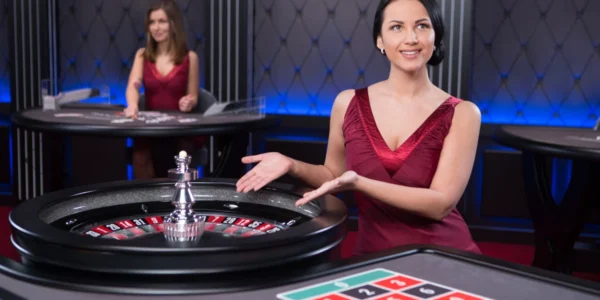
cristal poker casino

betway apuestas — guía del principiante | betway casino

¿Qué necesitas saber sobre casino cristal poker para comenzar?

Crea tu cuenta en cristal poker casino y verifica tu correo electrónico.

Realiza tu primer depósito con el importe mínimo de €14.

Activa el bono de bienvenida de bono de 50% para tu primer depósito desde la sección de promociones.

Revisa los requisitos de apuesta (40x playthrough en 7 días) antes de jugar.

Explora las mesas de póker disponibles y elige tu modalidad preferida.

Comienza a jugar y practica con torneos de baja entrada si eres principiante.

Guía de casino cristal poker para principiantes

¿Qué es cristal poker casino?

cristal poker casino es una sala de póker en línea que ofrece una amplia variedad de torneos y mesas de efectivo para jugadores de todos los niveles.

casino jackpot slots 2026 — slots jackpot casino grande

¿Cómo puedo registrarme en cristal poker casino?

Para registrarte, simplemente visita el sitio web de cristal poker casino y completa el formulario de inscripción con tus datos personales. El proceso es rápido y gratuito.

¿Qué métodos de depósito acepta cristal poker casino?

cristal poker casino acepta varios métodos de pago seguros, incluyendo tarjetas de crédito, monederos electrónicos y transferencias bancarias. El depósito mínimo es de €14.

¿Ofrece cristal poker casino algún bono de bienvenida?

Sí, cristal poker casino ofrece un atractivo bono de bienvenida de hasta bono de 50% para tu primer depósito para nuevos jugadores. Este bono está sujeto a requisitos de apuesta de 40x playthrough en 7 días.

¿Es legal jugar en cristal poker casino?

cristal poker casino opera bajo la licencia DGOJ — Dirección General de Ordenación del Juego, lo que garantiza un entorno de juego seguro y regulado para todos sus usuarios.

cristal poker casino ofrece una experiencia de juego segura y regulada para todos los usuarios.

cristal poker casino y el Juego Responsable: Herramientas de Autocontrol

El juego está destinado exclusivamente a mayores de 18 años. cristal poker casino opera bajo la supervisión de la Dirección General de Ordenación del Juego (DGOJ), el regulador nacional del sector en España. Si sientes que necesitas un descanso, puedes inscribirte en el Registro General de Interdicciones de Acceso al Juego (RGIAJ), el sistema oficial de autoexclusión. Además, recuerda que tienes a tu disposición la ayuda de FEJAR, llamando al 900 200 225 o visitando jugarBIEN.es. Establece límites de depósito y de tiempo, y juega siempre como forma de entretenimiento, nunca para recuperar pérdidas.

Sobre el autor: . Experto en casinos con más de 15 años de experiencia analizando juegos de mesa y estrategias de blackjack. Licenciado en Matemáticas, desglosa las probabilidades y ofrece consejos prácticos para jugadores.


cristal poker casino — secretos revelados | cristal poker casino

cristal poker casino — el ranking de jugadores en 2026

cristal poker casino vive un momento dorado, con una audiencia cada vez más amplia y participativa. La accesibilidad de las plataformas en línea ha democratizado el acceso a este juego, permitiendo que cualquier persona pueda probar suerte. No obstante, la competencia es feroz, y dominar aspectos como casino cristal poker se ha vuelto imprescindible para avanzar.

Ver también:

Todo sobre cristal poker ranking en la sección de resumen

Progressive Knockout is a tournament structure that revolutionizes the traditional single-elimination format by introducing a dynamic and escalating element of unpredictability. Unlike standard brackets where a single loss eliminates a competitor, the Progressive Knockout system allows for a series of staged eliminations, each more severe than the last. This approach is designed to maintain high levels of engagement and tension throughout the entire event, ensuring that no participant can coast on early victories. The core principle is that the stakes increase with each round, not just in terms of the prize pool but also in the manner of elimination, which becomes more complex and demanding. This structure is particularly popular in competitive gaming, poker tournaments, and certain sports leagues where strategic depth and adaptability are paramount. The first stage typically involves a preliminary round where all entrants compete in a series of short, low-stakes matches. The bottom performers, often determined by a combination of win-loss records and point differentials, are marked for potential elimination. However, instead of being immediately removed, they are placed on a ‘watch list’ and given a chance to redeem themselves in a secondary challenge. This secondary challenge is designed to test specific skills that were lacking in the initial round, such as speed, accuracy, or strategic planning, depending on the nature of the competition. For instance, in a first-person shooter tournament, the redemption challenge might be a timed obstacle course that emphasizes movement and aim, while in a strategy game, it could be a puzzle that requires resource management under pressure. Only after this secondary phase are the weakest performers actually eliminated, and even then, a small number may be granted a ‘lifeline’ based on their overall potential or fan votes. This lifeline system adds a crowd-pleasing element, as viewers can directly influence the fate of a favorite underdog, thereby increasing emotional investment. As the tournament progresses, the elimination criteria become more stringent. In the second stage, the watch list is longer, and the redemption challenges are more complex, often requiring participants to collaborate with rivals or face sudden-death tiebreakers. Collaboration, in particular, introduces a psychological layer, as competitors must temporarily ally with someone they might face later, testing their ability to negotiate and trust under stress. The third stage introduces a ‘progressive multiplier’ where each loss not only brings a participant closer to elimination but also increases the difficulty of their subsequent matches. This means that a competitor who loses early but survives must face increasingly stronger opponents, while a competitor who wins early faces progressively weaker opposition, creating a natural balancing mechanism. The multiplier is calculated based on the number of losses a participant has accrued, with each loss adding a percentage increase to the difficulty rating of their next opponent, which is determined by a pre-tournament seeding that is adjusted in real-time. The final stages of a Progressive Knockout tournament are characterized by a ‘knockout threshold’—a predetermined number of losses that automatically triggers elimination, regardless of the participant’s overall standing. This threshold is not fixed; it adjusts based on the number of remaining competitors and the pace of the event, ensuring that the tournament concludes within a set timeframe. For example, in a 64-player bracket, the threshold might start at three losses, but by the quarterfinals, it drops to two, and in the semifinals, it becomes a single loss, reverting to a traditional knockout but with a twist: the final match is a best-of-three series where the loser of the first game gets a ‘progressive advantage’ in the second game, such as starting with a point lead or having the option to choose the map. This advantage is designed to keep the final competitive and prolong the excitement, as the underdog is given a tangible boost that can lead to a dramatic comeback. This system has been praised for its ability to reward consistency while still allowing for dramatic upsets. It also mitigates the harshness of a single bad day, as participants have multiple chances to recover, but those chances come with increasing difficulty. Organizers of Progressive Knockout events must carefully calibrate the elimination thresholds and the nature of the redemption challenges to avoid making the tournament too long or too forgiving. Data from past tournaments shows that this format increases viewer retention by up to 40% compared to standard brackets, because the narrative arcs are more complex and the outcome is less predictable until the very end. Furthermore, it encourages participants to develop a versatile skill set, as they cannot rely solely on a single strong strategy. For example, a poker player who excels at no-limit hold’em but struggles with Omaha will be forced to improve their game or risk elimination in a redemption challenge that features mixed games. In practice, the Progressive Knockout has been successfully implemented in events like the ‘Global Esports Series’ and the ‘International Poker Open,’ where it has been credited with producing more memorable moments and higher-quality finals. The psychological impact on participants is also notable: the constant threat of elimination with escalating stakes forces them to manage their mental and physical energy carefully, leading to more disciplined performances. Many competitors report that the format pushes them to develop better time management and stress-coping techniques, which they carry over to other aspects of their careers. Critics, however, argue that the format can be confusing for casual viewers and that the redemption challenges can feel arbitrary. To address this, organizers often provide clear visual aids and commentary to explain the stakes in real-time. For instance, on-screen graphics might show a participant’s ‘danger meter’ that fills up as they accumulate losses, with color-coded warnings for when they are on the verge of elimination. Additionally, the progressive nature means that a participant who performs exceptionally well in early rounds can ‘bank’ a safety net, reducing the severity of later eliminations. This banking system is another layer of strategy, as participants must decide whether to conserve their banked advantages for later stages or use them to gain immediate momentum. For example, a participant might choose to spend a banked advantage to skip a particularly difficult redemption challenge, or save it to reduce the difficulty multiplier in a later round. In conclusion, the Progressive Knockout is not merely a variation of the knockout format but a sophisticated system that balances fairness, excitement, and strategic depth. It requires careful design and constant adjustment, but when executed well, it delivers an unparalleled competitive experience. As more leagues and tournaments adopt this format, it is likely to evolve further, incorporating data analytics and real-time adjustments to enhance its effectiveness.

casino en linea dinero real en usa 2026 — análisis breve
777 apuestas 2026 — comparativa de casas de apuestas

cristal poker casino en Cifras: Datos Clave

cristal poker casino en Cifras: Datos Clave
Feature Details
Métodos de pago Tarjetas, e-wallets, cripto
Bonos semanales Hasta 200% + 200 giros
Bonos Hasta 150 € en bienvenida
Casino en vivo Disponible con 750 mesas
Pago más rápido 10 en menos de 24 horas

Bonos y Términos de Póker en cristal poker casino

  • 500 giros gratis adicionales
  • €750 de bono sin depósito
  • bono de 50% para tu primer depósito
  • 35x liberación en 30 días
  • 25x playthrough requerido
  • 45x requisito en 14 días

Galería de cristal poker casino

cristal poker casino

marca apuestas ruleta — estrategias ganadoras | marca apuestas casino

¿Qué necesitas saber sobre casino cristal poker para comenzar?

Crea tu cuenta en cristal poker casino y verifica tu correo electrónico.

Realiza tu primer depósito con el importe mínimo de €14.

Activa el bono de bienvenida de bono de 50% para tu primer depósito desde la sección de promociones.

Revisa los requisitos de apuesta (40x playthrough en 7 días) antes de jugar.

Explora las mesas de póker disponibles y elige tu modalidad preferida.

Comienza a jugar y practica con torneos de baja entrada si eres principiante.

Guía de casino cristal poker para principiantes

¿Qué es cristal poker casino?

cristal poker casino es una sala de póker en línea que ofrece una amplia variedad de torneos y mesas de efectivo para jugadores de todos los niveles.

¿Cómo puedo registrarme en cristal poker casino?

Para registrarte, simplemente visita el sitio web de cristal poker casino y completa el formulario de inscripción con tus datos personales. El proceso es rápido y gratuito.

¿Qué métodos de depósito acepta cristal poker casino?

cristal poker casino acepta varios métodos de pago seguros, incluyendo tarjetas de crédito, monederos electrónicos y transferencias bancarias. El depósito mínimo es de €14.

¿Ofrece cristal poker casino algún bono de bienvenida?

Sí, cristal poker casino ofrece un atractivo bono de bienvenida de hasta bono de 50% para tu primer depósito para nuevos jugadores. Este bono está sujeto a requisitos de apuesta de 40x playthrough en 7 días.

¿Es legal jugar en cristal poker casino?

cristal poker casino opera bajo la licencia DGOJ — Dirección General de Ordenación del Juego, lo que garantiza un entorno de juego seguro y regulado para todos sus usuarios.

gnomos tragaperras 2026 — todo lo que necesitas saber

cristal poker casino ofrece una experiencia de juego segura y regulada para todos los usuarios.

cristal poker casino y el Juego Responsable: Herramientas de Autocontrol

El juego está destinado exclusivamente a mayores de 18 años. cristal poker casino opera bajo la supervisión de la Dirección General de Ordenación del Juego (DGOJ), el regulador nacional del sector en España. Si sientes que necesitas un descanso, puedes inscribirte en el Registro General de Interdicciones de Acceso al Juego (RGIAJ), el sistema oficial de autoexclusión. Además, recuerda que tienes a tu disposición la ayuda de FEJAR, llamando al 900 200 225 o visitando jugarBIEN.es. Establece límites de depósito y de tiempo, y juega siempre como forma de entretenimiento, nunca para recuperar pérdidas.

bingo casino online — números de la suerte | bingo casino online

Sobre el autor: . Experto en casinos con más de 15 años de experiencia analizando juegos de mesa y estrategias de blackjack. Licenciado en Matemáticas, desglosa las probabilidades y ofrece consejos prácticos para jugadores.


Scroll al inicio